
Revolution Medicines’ Clinical Trial Program Is Evaluating Investigational Treatments for RAS Mutant Cancers
Our novel RAS(ON) inhibitors are under investigation for treating different types of RAS mutant cancers, including pancreatic ductal adenocarcinoma (PDAC), non-small cell lung cancer (NSCLC), colorectal cancer (CRC), and other solid tumors
Revolution Medicines’ RAS(ON) Inhibitor Clinical Trials Program
- Histologically or cytologically confirmed pancreatic adenocarcinoma
- Diagnosis of metastatic disease ≤6 weeks prior to informed consent
- Documented RAS mutation status, either mutant or wild-type
- No prior treatment with systemic anticancer therapy in metastatic setting or prior RAS-targeted therapy in any treatment setting
- No active or known history of untreated central nervous system (CNS) metastatic disease
- Histologically confirmed PDAC with successful (R0/R1) curative intent surgical resection and no evidence of recurrent or metastatic disease
- Must have received perioperative (neoadjuvant, adjuvant, or a combination of both) multi-agent chemotherapy
- Must have completed most recent treatment within the past 12 weeks
- Documented RAS mutation status
- Confirmed locally advanced or metastatic disease
- Documented RAS mutation status
- No prior therapy with direct RAS‑targeted therapy or docetaxel
- No untreated central nervous system (CNS) metastases
- Confirmed metastatic disease
- Documented RAS mutation status, either mutant or wild-type
- No prior therapy with direct RAS‑targeted therapy
- No history of known central nervous system (CNS) metastatic disease
- Confirmed advanced disease
- Histologically confirmed RAS and KRAS mutation status
- Treatment naïve or received prior standard therapy
- Adequate organ function
- No active untreated brain metastases
- Confirmed locally advanced or metastatic solid tumor malignancy
- Documented KRAS G12C mutation
- No prior therapy with a KRAS G12C(ON) inhibitor
- No primary central nervous system (CNS) tumors
- Locally advanced or metastatic disease that is KRAS G12D mutant
- Received and progressed or been intolerant to prior standard therapy (including targeted therapy)
- No primary central nervous system (CNS) tumors
- Locally advanced or metastatic disease that is KRAS G12V mutant
- Received and progressed or been intolerant to prior standard therapy (including including non–RAS-targeted therapy) appropriate for tumor type and stage
- No primary central nervous system (CNS) tumors
- No previous direct RAS-targeted therapy (including KRAS G12V inhibitors)
- Advanced or metastatic KRAS G12C mutant solid tumor not amenable to curative surgeryb
- Advanced or metastatic RAS mutant NSCLCb
- Advanced or metastatic RAS G12D mutant NSCLCb
- Adequate organ function
- Received appropriate prior standard therapy
- No primary central nervous system (CNS) tumors
- Histologically confirmed, locally advanced or metastatic solid tumor malignancy with documented RAS mutation in KRAS, HRAS, or NRAS
- Received and progressed or been intolerant to prior standard therapy (Part 1 Dose Exploration)
- Nonsquamous NSCLC without a treatable driver mutation in non-RAS oncogenes that has not received prior systemic treatment (Part 2 Dose Expansion, Arms A and B)
- Solid tumor or CRC previously treated with ≤2 prior lines of therapy for advanced disease and progressed or been intolerant to prior standard therapies (Part 2 Dose Expansion, Arm C)
- No head and neck squamous cell carcinoma (SCCHN)
- Documented pancreatic carcinoma
- Poorly differentiated pancreatic carcinoma with metastatic disease
- RAS mutant confirmed colorectal adenocarcinoma with unresectable or metastatic diseaseb
- Presence of RAS G12D mutationb
- No primary central nervous system (CNS) tumors or impaired gastrointestinal function
-
Advanced or metastatic disease that is KRAS G12C mutant and not amenable to curative therapy
- Phase 1b dose escalation: Previously treated solid tumors
- Phase 1b dose expansion and Phase 2: NSCLC previously treated with immunotherapy, chemotherapy, and KRAS G12C(OFF) inhibitors OR previously treated solid tumors naïve to KRAS G12C(OFF) inhibitors
-
Adequate organ function
-
No primary central nervous system (CNS) tumors
-
No active brain metastases
RAS Protein Biology and RAS Mutant Cancers
RAS Proteins Play a Key Regulatory Role in Cell Growth and Development
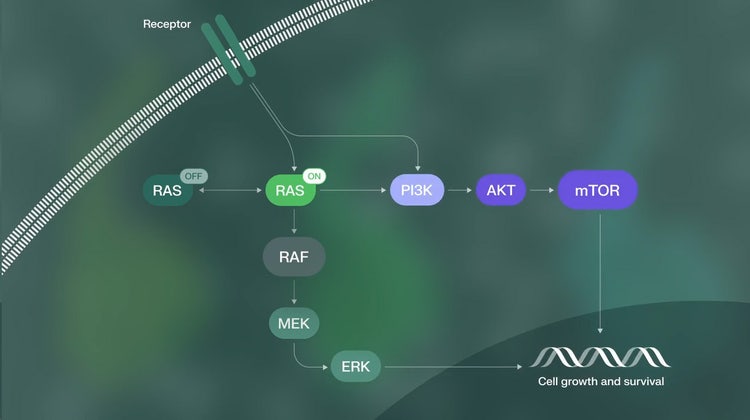
Watch and learn how
RAS proteins play a key regulatory role.
This visual is for illustrative purposes only and does not represent all molecular components
of the RAS pathway.
1 | RAS proteins play a crucial role in the regulation of cell proliferation and survival in normal cells
2 | These proteins function as tightly regulated molecular switches that cycle between the inactive GDP-bound [RAS(OFF)] and active GTP-bound [RAS(ON)] states
3 | In normal cells, RAS is predominantly in the OFF state because most cells do not need to actively proliferate. It is only transiently switched ON in response to growth signals when a cell needs to regenerate, before returning to the OFF state. This careful regulation maintains a tight balance between RAS in its OFF and ON states
4 | Oncogenic mutations in the RAS gene can lead to a shift in excessive RAS(ON) signaling in tumor cells, disrupting this balance and leading to cancer initiation and progression
8 | RAS(ON) signaling is stimulated by various cell surface receptors, leading to the activation of a wide range of downstream pathways, including RAF-MEK-ERK and PI3K-AKT-mTOR, which are key for cancer cell growth and survival
9 | Inhibiting RAS(ON) function can disrupt the activation of these signaling pathways and impede tumor growth, making it an important target for cancer therapies
RAS Mutations Are Common Across Multiple Tumor Types and Are Associated With Poor Survival Outcomes
RAS mutations
- RAS mutations are present in approximately one-fifth of human cancers
- In the presence of oncogenic mutations, such as G12X,a G13X,a and Q61X,a RAS proteins (i.e., KRAS, HRAS, or NRAS) are predominantly ON, which can drive cancer initiation and progression
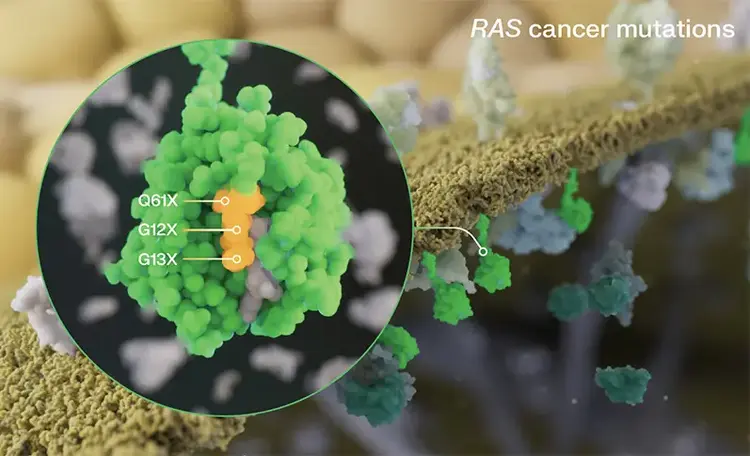
RAS mutations in cancers
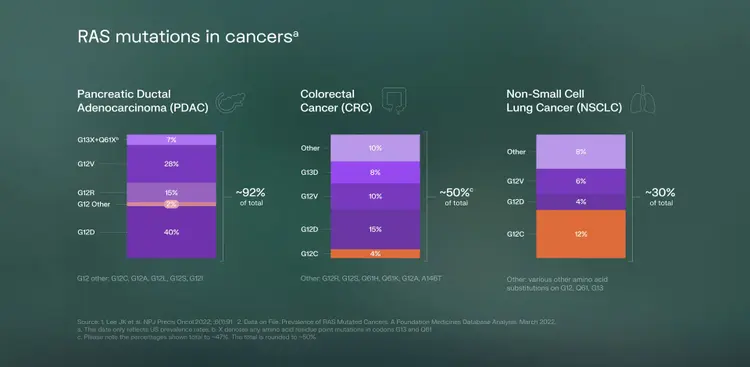
- Cancers commonly driven by RAS mutations include PDAC (~92% RAS mutant), CRC (~50% RAS mutant), and NSCLC (~30% RAS mutant), all of which exhibit a wide array of RAS variants
- Inhibiting RAS signaling could impede tumor growth, but there are limited therapeutic options that directly inhibit RAS
This visual is for illustrative purposes only and represents a high-level depiction of select RAS mutations.a
a“X” denotes any amino acid residue point mutation in a given codon (i.e., G12C, G12D, G12V, G13D, Q61H).

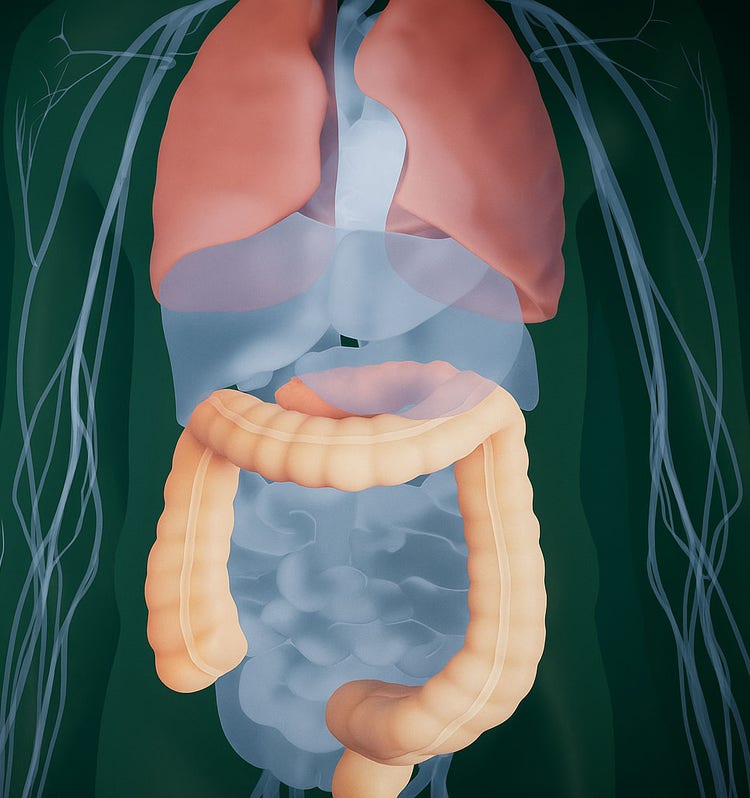
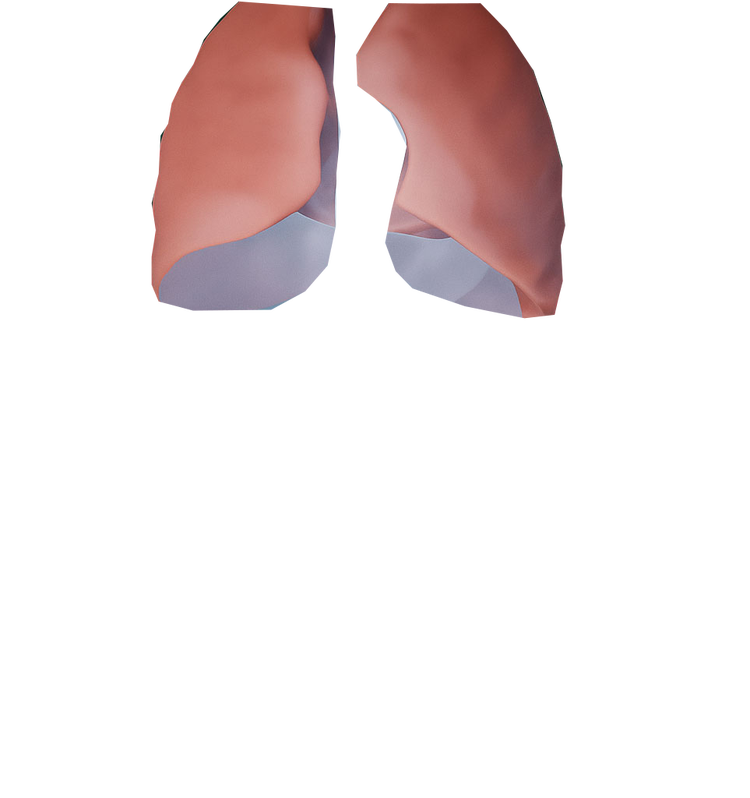
NSCLC Epidemiology
Estimated Statistics | Result
New cases of lung cancer in the US (ACS, 2025) | 197,186
Deaths in the US due to lung cancer (ACS, 2025) | 108,515
NSCLC cases with a RAS mutation | 30%
Metastatic NSCLC 5-year survival rate (NCI/SEER, 2015─2021) | 6%─13%
NSCLC has the highest-ranked cancer mortality in the United States
NSCLC Unmet Need
- NSCLC is usually diagnosed in the metastatic stage, reducing the potential for early intervention, leading to low 5-year survival rates
RAS Mutations and Prognosis
- Patients with RAS mutant NSCLC are most likely to harbor a RAS G12C or G12V mutation; other RAS G12, G13X,a and Q61Xa are among the other mutations that have been observed
- Patients with RAS G12C or G12V mutant NSCLC may have a lower overall survival and disease-free survival than those with wild-type RAS
a“X” denotes any amino acid residue point mutation in a given codon.
PDAC Epidemiology
Estimated Statistics | Result
New cases of PDAC in the US (ACS, 2025) | 67,440
Deaths in the US due to PDAC (ACS, 2025) | 51,980
PDAC cases that harbor a RAS mutation | 92%
Metastatic PDAC 5-year survival rate (NCI/SEER, 2015─2021) | 3%
PDAC Unmet Need
- Many symptoms of PDAC do not arise until the advanced stage, contributing to metastatic diagnoses and poor outcomes
- Unfortunately, treatment options for recurrent and advanced disease are limited
RAS Mutations and Prognosis
- Patients with RAS mutant PDAC are most likely to harbor a RAS G12D or G12V mutation; RAS G12A, G12C, G12I, G12L, G12R, G12S, G13Xa and Q61Xa are among the other mutations that have been observed
- Patients with RAS G12D or G12V mutant PDAC may have a higher risk of death than patients with RAS wild-type PDAC
a“X” denotes any amino acid residue point mutation in a given codon.

CRC Epidemiology
Estimated Statistics | Result
New cases of CRC in the US (ACS, 2025) | 154,270
Deaths in the US due to CRC (ACS, 2025) | 52,900
CRC cases with a RAS mutation | 50%
Metastatic CRC 5-year survival rate (NCI/SEER, 2015─2021) | 16%
CRC Unmet Need
- Despite the number of currently available FDA-approved therapies for CRC, it remains a common disease with a high mortality rate
RAS Mutations and Prognosis
- Patients with RAS mutant CRC are most likely to harbor a RAS G12D, G12V, or G13D mutation; RAS A146T, G12A, G12C, G12R, G12S, Q61H, and Q61K are among the other mutations that have been observed
- Patients with RAS mutant CRC may have a more aggressive disease phenotype and shorter overall survival than those with RAS wild-type CRC

The Tri-Complex Inhibitor Platform
RAS(ON) Tri-Complex Inhibitors Are Designed to Block RAS(ON) Activity
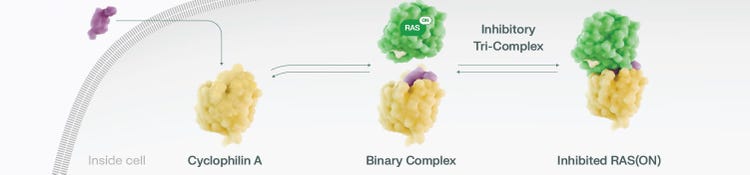
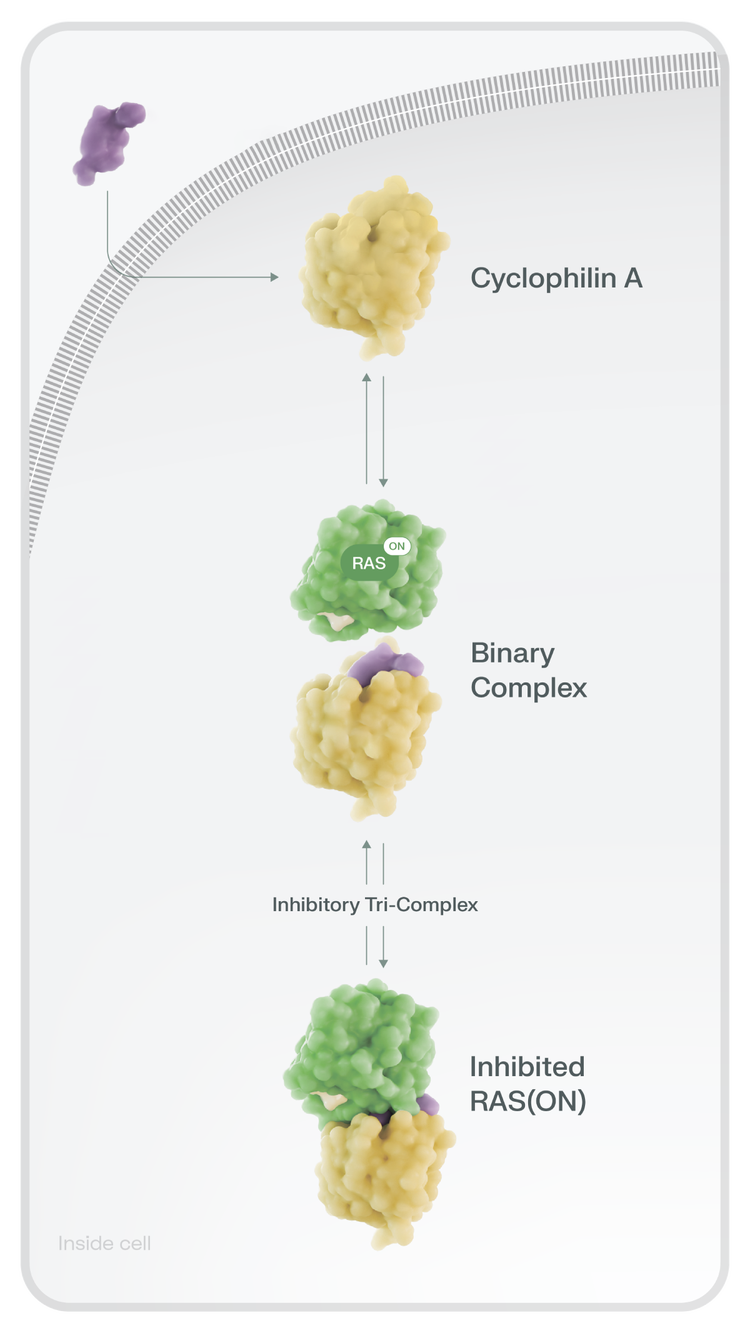
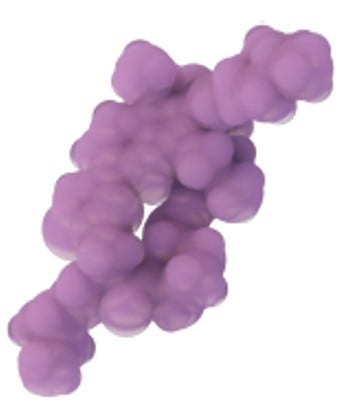
Revolution Medicines’ novel tri-complex inhibitor platform is intended to block RAS in its ON state
and reduce downstream oncogenic signaling
Investigational RAS(ON) Inhibitors
Four Investigational Revolution Medicines RAS(ON) Inhibitors Are in Clinical-Stage Trials for Treating RAS Mutant Cancers
Daraxonrasib (RMC-6236)
A RAS(ON) multi-selective
noncovalent inhibitor
Ongoing clinical trials in advanced solid tumors
Current Phase 3 or early phase clinical trials include RASolute 304, RASolute 303, RASolute 302, RASolve 301, RMC‑6236‑001, and RMC‑APEX‑103
Zoldonrasib (RMC-9805)
A RAS(ON) G12D-selective
covalent inhibitor
Ongoing clinical trials in advanced solid tumors
Current early phase clinical trials include RMC-LUNG-101, RMC-9805-001, and RMC‑GI‑102
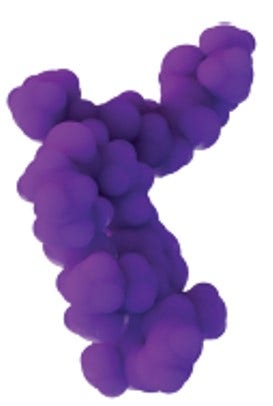
Elironrasib (RMC-6291)
A RAS(ON) G12C-selective
covalent inhibitor
Ongoing clinical trials in advanced solid tumors
Current early phase clinical trials include RMC-LUNG-101, RMC-6291-101, and RMC-6291-001
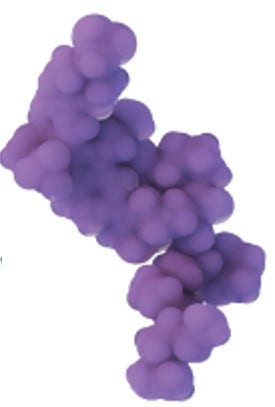
RMC-5127
A RAS(ON) G12V-selective
noncovalent inhibitor
Ongoing clinical trials in advanced solid tumors
Current early phase clinical trials include RMC-5127-001
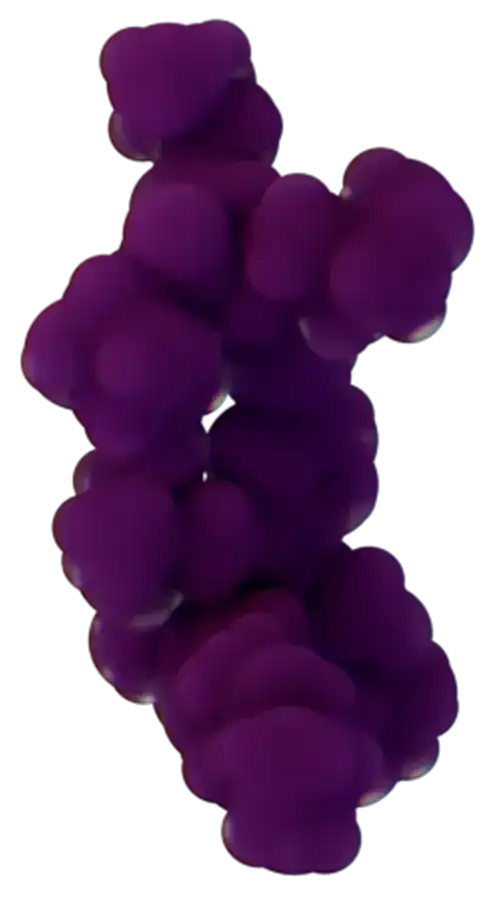
Click here for more information about Revolution Medicines’ RAS(ON) inhibitor pipeline
Abbreviations
ACS, American Cancer Society; AKT, protein kinase B; CNS, central nervous system; CRC, colorectal cancer; CYPA, cyclophilin A; ERK, extracellular signal-regulated kinase; GAP, GTPase-activating protein; GDP, guanine diphosphate; GEF, guanine nucleotide exchange factor; GTP, guanine triphosphate; HRAS, Harvey rat sarcoma viral oncogene homolog; KRAS, Kirsten rat sarcoma; MEK, mitogen-activated protein kinase kinase; mTOR, mammalian target of rapamycin; NCI/SEER, National Cancer Institute/Surveillance, Epidemiology, and End Results; NRAS, neuroblastoma RAS viral oncogene homolog; NSCLC, non-small cell lung cancer; PDAC, pancreatic ductal adenocarcinoma; PI3K, phosphatidylinositol-4,5-bisphosphate 3-kinase; RAF, rapidly accelerated fibrosarcoma; RAS, rat sarcoma.

References
1. Bahar MD, Kim HJ, Kim DR. Targeting the RAS/RAF/MAPK pathway for cancer therapy: from mechanism to clinical studies. Signal Transduct Target Ther. 2003;8(1):455. 2. Cascetta P, Marinello A, Lazzari C, et al. KRAS in NSCLC: state of the art and future perspectives. Cancers (Basel). 2022;14(21):5430. 3. Chen K, Zhang Y, Qian L, et al. Emerging strategies to target RAS signaling in human cancer therapy. J Hematol Oncol. 2021;14(1):116. 4. Clerick J, Oosterwyck AV, Carton S. Transforming the landscape of colorectal cancer treatment with immunotherapy: evolution and future horizons. Cancer Treat Res Commun. 2024:39:100807. 5. Cregg J, Pota K, Tomlinson ACA, et al. Discovery of elironrasib (RMC-6291), a potent and orally bioavailable, RAS(ON) G12C-selective, covalent tri-complex inhibitor for the treatment of patients with RAS G12C-addicted cancers. J Med Chem. 2025;68:6041-6063. 6. ClinicalTrials.gov identifier: NCT05379985. Accessed March 24, 2026. https://clinicaltrials.gov/study/NCT05379985. 7. ClinicalTrials.gov identifier: NCT05462717. Accessed March 24, 2026. https://clinicaltrials.gov/study/NCT05462717. 8. ClinicalTrials.gov identifier: NCT06040541. Accessed March 24, 2026. https://clinicaltrials.gov/study/NCT06040541. 9. ClinicalTrials.gov identifier: NCT06128551. Accessed March 24, 2026. https://clinicaltrials.gov/study/ NCT06128551. 10. ClinicalTrials.gov identifier: NCT06162221. Accessed March 24, 2026. https://clinicaltrials.gov/study/NCT06162221. 11. ClinicalTrials.gov identifier: NCT06445062. Accessed March 24, 2026. https://clinicaltrials.gov/study/NCT06445062. 12. ClinicalTrials.gov identifier: NCT06625320. Accessed March 24, 2026. https://clinicaltrials.gov/study/NCT06625320. 13. ClinicalTrials.gov identifier: NCT06881784. Accessed March 24, 2026. https://clinicaltrials.gov/study/NCT06881784. 14. ClinicalTrials.gov identifier: NCT07252232. Accessed March 24, 2026. https://clinicaltrials.gov/study/NCT07252232. 15. ClinicalTrials.gov identifier: NCT07349537. Accessed March 24, 2026. https://clinicaltrials.gov/study/NCT07349537. 16. ClinicalTrials.gov identifier: NCT07397338. Accessed March 24, 2026. https://clinicaltrials.gov/study/NCT07397338. 17. ClinicalTrials.gov identifier: NCT07491445. Accessed March 24, 2026. https://clinicaltrials.gov/study/NCT07491445. 18. Data on File. Prevalence of RAS mutated cancers. A Foundation Medicine database analysis (March 2022). 19. Frisch A, Martin E, Kim SY, et al. KRAS-mutated NSCLC: past, present, and future directions in a rapidly evolving landscape. Oncologist. 2025;30(6):oyaf153. 20. Hayes TK, Der CJ. Mutant and WT Ras: co-conspirators in cancer. Cancer Discov. 2013;3(1). 21. Jänne PA, Bigot F, Papadopoulos K, et al. Preliminary safety and antitumor activity of RMC-6291, a first-in-class, tri-complex KRAS G12C(ON) inhibitor, in patients with or without prior KRAS G12C(OFF) inhibitor treatment. Mol Cancer Ther. 2023;22(12_suppl): PR014. 22. Jiang J, Jiang L, Maldonato BL, et al. Translational and therapeutic evaluation of RAS-GTP inhibition by RMC-6236 in RAS-driven cancers. Cancer Discov. 2024;14(6):994-1017. 23. Knox JE. Discovery of RMC-9805, an oral, RAS(ON) G12D-selective covalent tri-complex inhibitor. Cancer Res. 2024;84(7):ND03. 24. Koltun E, Lin W. RMC-6236, a RAS(ON) multi-selective tri-complex inhibitor. Orally presented at: AACR 2024; April 9, 2024; Session ADT06. 25. Lee JK, Sivakumar S, Schrock AB, et al. Comprehensive pan-cancer genomic landscape of KRAS-altered cancers and real-world outcomes in solid tumors. NPJ Precis Oncol. 2022;6(1):91. 26. Liu J, Kang R, Tang D. The KRAS-G12C inhibitor: activity and resistance. Cancer Gene Ther. 2022;29(7):875-878. 27. National Cancer Institute. SEER Explorer: Stage distribution of SEER incidence cases, 2012-2021. Accessed March 24, 2026. https://seer.cancer.gov/statistics-network/explorer. 28. National Cancer Institute. SEER Explorer: SEER 5-year relative survival rates, 2015-2021. Accessed March 24, 2026. https://seer.cancer.gov/statistics-network/explorer. 29. Norton C, Shaw MS, Rubnitz Z, et al. KRAS mutation status and treatment outcomes in patients with metastatic pancreatic adenocarcinoma. JAMA Netw Open. 2025;8(1):e2453588. 30. Oya Y, Imaizumi K, Mitsudomi T. The next-generation KRAS inhibitors…What comes after sotorasib and adagrasib? Lung Cancer. 2024;194:107886. 31. Prior IA, Hood FH, Hartley JL. The frequency of Ras mutations in cancer. Cancer Res. 2020;80(14):2969-2974. 32. Revolution Medicines. Pipeline. Accessed March 24, 2026. https://www.revmed.com/pipeline/. 33. Schulze CJ, Seamon KJ, Zhao Y, et al. Chemical remodeling of a cellular chaperone to target the active state of mutant KRAS. Science. 2023;18;381(6659):794-799. 34. Siegel RL, Kratzer TB, Giaquinto AN, Sung H, Jemal A. Cancer statistics, 2025. CA Cancer J Clin. 2025;75(1):10-45. 35. Singhal A, Li BT, O’Reilly EM. Targeting KRAS in cancer. Nature Med. 2024;30:969-983. 36. Steelman KS, Chappell WH, Abrams SL, et al. Roles of the Raf/MEK/ERK and PI3K/PTEN/Akt/mTOR pathways in controlling growth and sensitivity to therapy-implications for cancer and aging. Aging (Albany NY). 2011;3(3):192-222. 37. Stoop TF, Javed AA, Oba A, et al. Pancreatic cancer. Lancet. 2025;405(10485):1182-1202. 38. Sütcüoğlu O, Yildirim HC, Almutadova E, et al. RAS mutations in advanced colorectal cancer: mechanisms, clinical implications, and novel therapeutic approaches. Medicine (Kaunas). 2025;61(7):1201. 39. Tolani B, Celli A, Yao Y, et al. Ras mutant cancers are sensitive to small molecule inhibition of V-type ATPases in mice. Nat Biotechnol. 2022;40(12):1834-1844. 40. Uras IZ, Moll HP, Casanova E. Targeting KRAS mutant non-small cell lung cancer: past, present and future. Int J Mol Sci. 2020;21(12):4325. 41. Weber S, Carroll SL. The Role of R-Ras proteins in normal and pathologic migration and morphologic change. Am J Pathol. 2021;191(90):1499-1510. 42. Yang X, Wu H. RAS signaling in carcinogenesis, cancer therapy and resistance mechanisms. J Hematol Oncol. 2024;17(1):108.